For security reasons, you will be logged out in 4 minutesCannot be added!Your basket contains a blocked quote and must be finalised before you can order other items.Add to basket...Item added to basket
Express
order
Basket0

Nippon Genetics : What floorutions for the workflows of molecular biology?

Japanese in origin and a benchmark across Europe, Nippon Genetics designs molecular biology solutions engineered for safety, simplicity and performance. From Midori Green staining — a safer alternative to ethidium bromide — to FastGene systems for electrophoresis, Blue/Green LED imaging and gel documentation, the brand equips research, teaching and quality control (QC) laboratories. PCR consumables, DNA ladders, competent cells and purification kits complete a coherent, dependable portfolio available through Dutscher. Every solution prioritises ergonomics, reproducible results and the reduction of hazardous substances at the bench.
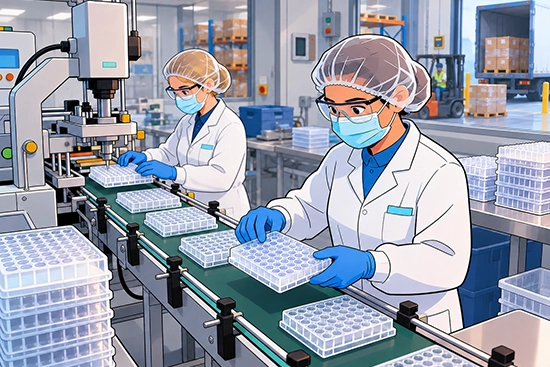
From Japanese roots to a European benchmark

Rooted in Japanese engineering and a keen understanding of bench practice, Nippon Genetics is expanding across Europe to bring innovation closer to its users. Early on, the brand tackled a major laboratory pain point: the use of ethidium bromide. It launched Midori Green, a family of safer, higher-performing stains for DNA/RNA, and built around them an electrophoresis and imaging workflow that is straightforward to implement. With the FastGene line, it standardises compact, robust solutions suited to routine throughput as well as teaching labs. Over the years, a pan-European distribution network, responsive technical support and rigorous quality control have earned the trust of researchers, educators and QC managers, from academic benches to regulated environments.

Expertise and specialist fields

Nippon Genetics is recognised for a clear trio: safety, simplicity and performance in molecular biology. For visualisation, Midori Green dyes (for gel staining or loading mixes) provide a non-mutagenic alternative to ethidium bromide, with high sensitivity and low background. Used with Blue/Green LED transilluminators, they maximise the signal-to-noise ratio and protect DNA, enabling higher-quality extractions and cloning.

For electrophoresis, the brand offers ready-to-use gels, high-performance agarose, and tanks and power supplies engineered for reproducible runs. The DNA ladders span the standard ranges for genotyping, insert verification and PCR confirmation. For imaging, compact gel documentation systems, LED or UV as required, deliver fast, standardised data capture, from teaching labs through to day-to-day screening.

Nippon Genetics complements this with consumables and reagents that streamline workflows: enzymes and mixes for PCR/qPCR, reverse transcription reagents, column-based purification kits (gel, PCR, plasmid), competent E. coli cells for transformation, and PCR plastics (low-profile tubes, plates and films) optimised for thermal uniformity. Each component is designed to fit everyday practice in research, quality control and R&D labs, with clear protocols and proven compatibility with standard equipment.

The positioning is consistent: reduce exposure to hazardous substances, simplify handling, and deliver reliable results, fast. In a word: FastGene solutions that save time without compromising analytical quality.

Nippon Genetics lab products supplied by Dutscher

Frequently asked questions about the Nippon Genetics brand

Do Midori Green dyes safely replace ethidium bromide?
Yes. Designed as a safer, non-mutagenic alternative, they offer high sensitivity and can be used with blue/green LED or UV as required.

Do Blue/Green LED transilluminators better preserve DNA?
Their spectrum minimises photo-induced damage and favours DNA recovery after band excision—ideal for cloning and library prep.

Are the ready-to-use gels compatible with our existing tanks?
Formats are standard. Simply check dimensions and number of wells for an optimal fit with your trays and combs.

Does the brand offer reagents for PCR and qPCR?
Yes: enzymes, master mixes, reverse transcription and matching DNA ladders. Dutscher will guide you to the right reagent/consumable pairing.

What about safety and environmental commitments?
The approach aims to reduce hazardous substances at the bench (e.g. alternatives to EtBr) and to provide SDS and detailed protocols.

What technical support is available if you have a protocol question?
Dutscher and Nippon Genetics provide responsive support: datasheets, user guides and assistance integrating into your workflows.